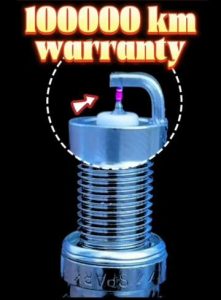
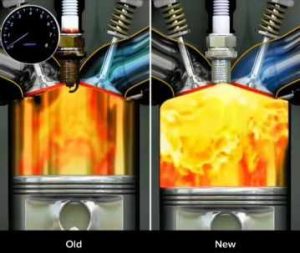
For over a hundred years, spark plugs have had one main job in a gasoline engine: to ignite the air-fuel mixture. This causes an explosion that pushes the pistons down. In
the early days, spark plugs didn’t fire very well. In fact, they were so simple, you could take them apart, clean and repair them, then put them back together and reuse them.
For decades, most spark plugs used copper electrodes. Copper is a great conductor of electricity, so it was effective at generating a spark to ignite the air-fuel mixture. But copper is also very soft, so it wears out relatively quickly.

Back when I was a young mechanic, we were lucky to get 20,000 miles out of a set of copper spark plugs. Sometimes, especially in older engines that burned oil, they needed replacing even sooner.
Then came platinum spark plugs. Platinum is a much harder metal than copper, so it keeps its sharp edges longer—important for consistent spark firing. Platinum plugs can easily last 100,000 miles. Another advantage: platinum plugs tend to run a bit hotter, which helps burn off carbon deposits. That means they stay cleaner and last longer.
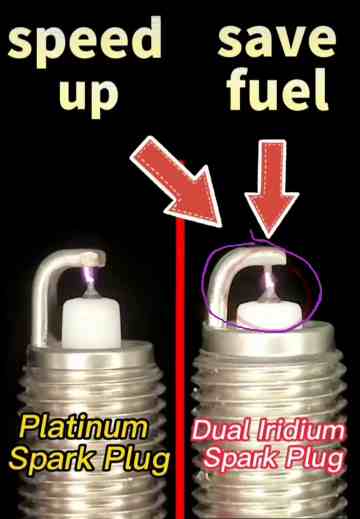
After platinum, we got iridium spark plugs—the top-of-the-line option today. Iridium is six times harder than platinum and has a 700-degree higher melting point, so it lasts even longer. In fact, I’ve seen Chevy V8 engines with 200,000 miles on them where the iridium plugs had never been changed and were still working fine.
And the price? Which is subject to change, You can usually pick up iridium spark plugs for around $5 to $8 apiece. There’s a reason many modern engines come from the factory with iridium plugs: because spark plugs 
Take, for example, the V6 vehicle a type of an engine and not necessarily for this Toyota here. The front three spark plugs are easy to get to. But the rear three? They’re under the intake manifold—you have to completely remove it to get to them. It’s a huge job. Some modern engines are even worse; in some cases, you practically have to remove the engine to change the plugs. That’s why long-lasting iridium plugs make sense—you want to go 100,000 to 200,000 miles without touching them.
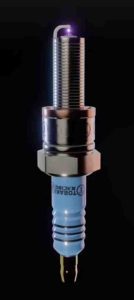
The Three Main Types of Spark Plugs:
Copper – Cheap, good conductor, but wears quickly.
Platinum – Longer-lasting, holds sharp edges, runs hotter.
Iridium – Longest-lasting, extremely durable, ideal for hard-to-reach engines.
But then there are the gimmicky spark plugs. Some manufacturers make plugs with four electrodes or strange designs and claim they’ll boost horsepower or improve gas mileage. Stay away from that stuff—it’s marketing nonsense.
Back in the day, ignition systems had points and condensers, mechanically opening and closing to fire the spark plugs. In those days, switching plugs could make a difference. But those systems are long gone. Today’s ignition systems are electronic and finely tuned by engineers. The OEM spark plug that came with your car was designed for your engine—and it’s almost always the best choice.
Let Me Tell you
Years ago, a customer brought me his Nissan sports car that was making a terrible clacking noise. I asked him when it started, and he said, “Right after I changed the spark plugs.”
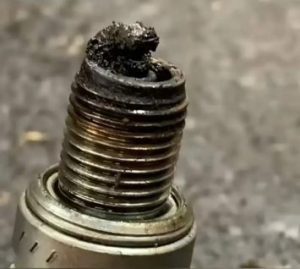
I pulled one out and saw the top of the plug had shiny spots—it was hitting something inside the engine. I compared the plug to a proper set from my local parts store and realized the one he installed stuck out farther than it should have. It was actually hitting the piston!
Turns out he bought the plugs from a discount parts store, and their system had listed the wrong spark plug due to a software issue. He was lucky—he brought the car to me quickly, I installed the correct plugs, and after a day or so, the noise went away. No long-term damage.
The Takeaway:
Always use the correct spark plug. Don’t trust random parts recommendations. Take one of your old plugs, compare the part number, the length, and the thread size. If it’s too long, it can hit the pistons. Too short, and it won’t ignite the mixture properly.
Modern engines are refined over decades, and spark plugs are carefully matched to those designs. Changing the type or design can undo years of engineering. The plug must be:
The correct size
The right heat range for normal driving
One Exception
If your car came with copper or platinum plugs, you can often upgrade to iridium—if the iridium plug is available in the correct size and heat range. Don’t expect more horsepower or better gas mileage. The only benefit is longer life.
For example, I had a vehicle where the intake manifold had to come off just to reach the plugs. While I was already in there replacing a leaking valve cover gasket, I replaced the still-good plugs with iridium ones—just so I wouldn’t have to do that job again anytime soon.
So, if an iridium version of your car’s plug is available and fits exactly—go for it. Just don’t fall for gimmicks or believe that a new spark plug design will magically improve your car’s performance. Trust what the engineers designed for your car.
🔥 Best Spark Plugs for Your Car: What You Need to Know Before You Buy
When it comes to keeping your engine running smoothly, few components are as critical—and often overlooked—as your spark plugs. These small parts have one huge job: to ignite the air-fuel mixture inside the engine, setting off the combustion that powers your vehicle.
Whether you’re a DIY mechanic or just doing some research before heading to the shop, this guide covers the best spark plugs available today, the differences between copper, platinum, and iridium plugs, and which ones are best for your engine type.
✅ Why Spark Plugs Matter
Every time your engine cylinder fires, it’s thanks to a spark plug. But not all spark plugs are created equal. The right plug ensures:
-
Reliable starts

-
Smooth engine performance
-
Optimal fuel efficiency
-
Lower emissions
-
Long engine life
🔍 Types of Spark Plugs: What’s the Difference?
There are three main types of spark plugs used in modern vehicles. Choosing the right one depends on your engine’s design, accessibility, and how long you want your spark plugs to last.
1. Copper Spark Plugs – Budget-Friendly, Shorter Lifespan
-
Pros: Great electrical conductivity, affordable
-
Cons: Wears out quickly (15,000–20,000 miles)
-
Best for: Older engines and short-term use
🛠 Example: Champion Copper Plus Spark Plugs – A trusted OE replacement with excellent ignition performance for classic engines or older models.
2. Platinum Spark Plugs – Mid-Range, Durable
-
Pros: Lasts up to 100,000 miles, retains sharp edges for a consistent spark, runs hotter to self-clean
-
Cons: Slightly more expensive than copper
-
Best for: Daily drivers and modern fuel-injected engines
🛠 Example: A-Premium Platinum/Iridium Spark Plugs – Engineered for vehicles like the Honda Civic, Ford Probe, and Dodge Colt, offering a solid upgrade in longevity and combustion efficiency.
3. Iridium Spark Plugs – Longest Life, Best Performance
-
Pros: Up to 6x harder than platinum, withstands extreme temperatures, can last up to 200,000 miles in some engines
-
Cons: Higher cost, but pays off over time
-
Best for: Newer vehicles, hard-to-reach engines, and long service intervals
🛠 Top Picks:
-
NGK Iridium IX – Excellent for Ram 1500 and other high-performance or V8 engines
-
ECCPP Iridium Set – Ideal for VW models like Jetta, Golf, and Beetle
-
MAS + Motorcraft SP-509 Kit – A top-tier combo for Ford trucks and SUVs
🚨 Why Iridium Is Often the Smartest Choice
If your vehicle has a modern engine—especially a V6 or V8 where the spark plugs are buried under the intake manifold—it’s worth upgrading to iridium spark plugs.
Changing spark plugs on these engines can be a major job. Using long-life iridium plugs saves you from doing it again anytime soon. In many cases, the OEM spark plugs are already iridium, and replacing them with the same type is your best bet.
🛑 Avoid Gimmicks: Multi-Electrode & “Performance” Spark Plugs
You may come across spark plugs claiming:
-
“+15 HP gains”
-
“Better MPG with 4-tip design”
-
“Turbo spark technology”
Don’t fall for it. These are marketing gimmicks. Modern vehicles have finely tuned electronic ignition systems, and using non-OEM or gimmicky spark plugs can lead to misfires, reduced fuel economy, and even engine damage.
⚠️ Real-Life Warning: The Wrong Plug Can Cause Damage
A customer once brought me a sports car making a loud ticking noise. Turns out, the aftermarket spark plugs were too long—they were hitting the pistons! Always compare your new plugs to the originals in:
-
Thread length
-
Reach
-
Heat range
-
Electrode design
Buying from a reputable brand or verified OE replacement is the safest way to avoid problems.
Spark Plug Buying Tips
✅ DO:
-
Match the OEM part number or dimensions
-
Upgrade to iridium if your engine allows it
-
Buy from trusted brands like NGK, Denso, Bosch, Champion, Motorcraft Amazon (Mas) ignition
❌ DON’T:
-
Trust a random fitment chart without double-checking
-
Use multi-electrode plugs unless OEM-specified
-
Expect big performance gains from spark plug swaps alone
⭐ Featured Spark Plug Sets Worth Considering
Here are a few well-reviewed, vehicle-specific spark plug and coil kits:
🧰 A-Premium Ignition Coils + Iridium Plugs on Amazon
-
Compatible with Honda Pilot, Ridgeline, Acura MDX
-
Features dual platinum-iridium construction
-
Long lifespan (80,000–100,000 miles)
🧰 ECCPP Ignition Coil + Spark Plug Set ON amazon
-
For VW Jetta, Golf, Beetle 2.0L (2001–2005)
-
Upgraded energy output for better cold starts
🧰 MAS Ignition Coils + Motorcraft SP-509 Plugs |Amazon
-
For Ford F-Series, Expedition, Mustang
-
Excellent durability with factory compatibility
🚗 Final Thoughts: What’s the Best Spark Plug for Your Engine?
-
Daily commuter or older car? Go with platinum or copper for affordability.
-
Modern V6 or V8 with tough access? Spend a bit more on iridium—it’s worth it.
-
Tuned or performance engine? Stick with OEM or NGK Iridium IX for reliable, consistent combustion.
📌 Bottom Line:
Stick with OEM-quality spark plugs, avoid gimmicks, and upgrade to iridium when possible—especially if your engine’s spark plugs are difficult to access. You’ll save time, labor, and avoid future headache